If you're searching for block paving cleaning in Rochdale, chances are your driveway or patio has reached the point where a quick sweep and a bit of rain no longer cuts it. The paving's gone dark, there's moss pushing up through the joints, and whatever colour it started out as is now a distant memory. That's a normal state of affairs for most properties across the borough, and in the vast majority of cases, the paving is perfectly restorable — it just needs the right process done in the right order.
This guide walks through how a professional block paving clean is actually carried out, what each stage achieves, and where DIY tends to fall short. There's also honest advice on sealing, re-sanding, and what to look out for before you book anyone. Prices are included where relevant so you can gauge what's reasonable in this area.
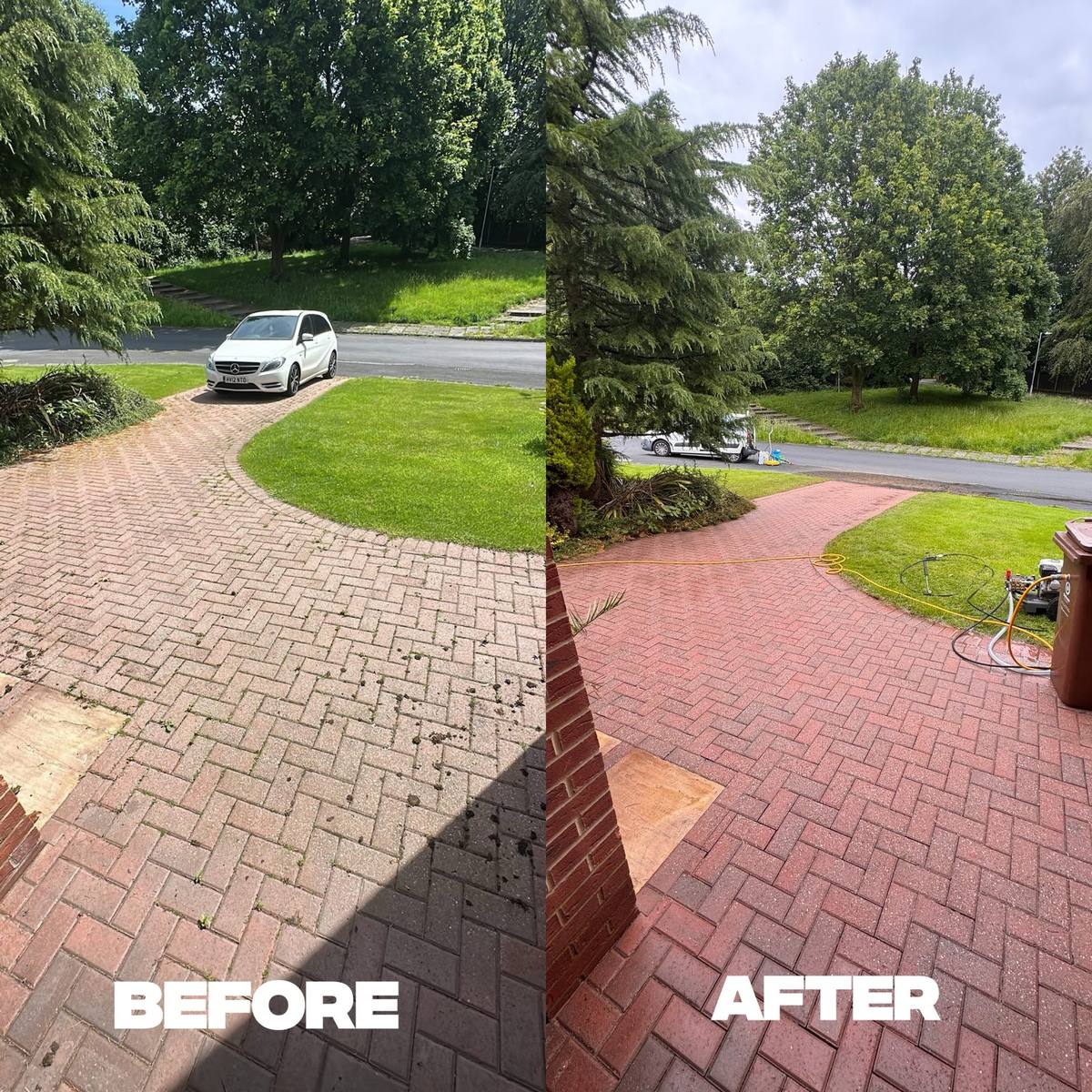
Before and after: red block paving driveway cleaned by C&C Precision — colours fully restored.
Quick answer: Block paving cleaning in Rochdale typically involves pre-treating with a detergent or biocide, pressure washing with a rotary surface cleaner to lift dirt, moss and weeds, re-sanding joints with kiln-dried sand, and optionally sealing. Most driveways take two to four hours depending on size and condition.
Why Block Paving Gets in Such a State
Greater Manchester doesn't get Mediterranean summers. Rochdale in particular sits at the foot of the Pennines and picks up significant rainfall throughout the year, with prolonged damp spells that give moss, algae and lichen exactly the conditions they need to take hold. North-facing drives and patios that get limited direct sun are especially vulnerable — the surface stays wet longer, biological growth spreads faster, and within a couple of years a relatively new driveway can look like it's been there for decades.
Alongside the biological growth, the joint sand that holds block paving stable gradually erodes. Rain washes it out, foot traffic compacts and displaces it, and weeds colonise the gaps. Once the joints start to empty, the individual blocks can rock slightly, which accelerates the problem — water gets in underneath, frost lifts individual pavers, and the surface starts to look uneven. Understanding why paving goes black helps set realistic expectations: some of that darkening is surface algae that cleans off completely, but older pavers that have absorbed years of contamination may lighten considerably rather than returning to their original colour. Most driveways clean up far better than their owners expect, but it's worth knowing that age and original paving quality both affect the outcome.
If you're curious about how persistent wet weather accelerates this kind of surface deterioration, this guide on wet weather and driveway damage in Greater Manchester goes into more detail on the mechanics.
Step One: Pre-Treatment Before the Pressure Washer Goes On
A proper block paving clean doesn't start with the pressure washer. It starts with a chemical pre-treatment — typically a diluted biocide or alkaline detergent applied across the whole surface and left to dwell. Dwell time matters. The chemical needs long enough to penetrate the biological matter, break it down, and kill it at the root rather than just dislodging the visible growth. Depending on the product and the severity of the contamination, that dwell period might be anywhere from fifteen minutes to an hour.
This step is the most significant difference between a professional clean and someone hiring a pressure washer for the afternoon. Skip the pre-treatment and you're essentially power-washing live growth off the surface — which looks clean immediately but allows regrowth to return within months because the spores are still present in the joints and substrate. Apply the right chemical first, and the biocide continues working after the job is done, slowing regrowth considerably.
This same principle applies to softwashing, which uses chemical treatment as the primary cleaning method rather than high pressure — particularly useful on surfaces that can't tolerate aggressive water pressure, such as painted render or older stonework.
Step Two: Pressure Washing With a Rotary Surface Cleaner
Once the pre-treatment has done its work, the washing stage begins. A professional setup uses a rotary surface cleaner — a circular head that houses two or more high-pressure jets spinning beneath a shroud — rather than relying on a lance alone. The rotary head keeps the water jets a consistent distance from the surface at all times, which produces an even clean across the whole area rather than the tiger-striping that a hand-held lance tends to leave.
Pressure settings aren't fixed. An operator should assess the condition of the paving before starting and adjust accordingly. Newer block paving in good condition can handle higher pressures without issue. Older pavers, anything showing signs of frost damage or surface flaking, or paving laid on a sand bed that's already unstable, all need a more careful approach. Going in too hard on compromised paving doesn't clean it better — it erodes the chamfered edges of the blocks, damages the surface texture, and can destabilise the whole laid area. The machine choice and the person controlling it both matter.
For driveways specifically, the same process considerations apply — you can read more about what actually changes with a thorough clean in the guide to monoblock driveway cleaning.
Step Three: Re-Sanding the Joints
Pressure washing removes a significant amount of the existing joint sand — that's unavoidable. The water that flushes biological growth and debris out of the surface inevitably takes loose sand with it. Once the paving is clean and fully dry, those joints need to be replenished, and the material used matters. Kiln-dried jointing sand is the standard choice: it's dry enough to brush into the joints easily, compact down properly, and lock in place once settled.
The process involves spreading the sand across the surface and brushing it in multiple directions until all the joints are consistently filled, then using a plate compactor to vibrate it down and consolidate it. The brushing and compaction cycle is usually repeated two or three times to achieve an even fill. This isn't an optional finishing touch — it's a structural step. Empty or partially filled joints allow the individual blocks to move, which over time leads to sinking, rocking pavers, and the kind of uneven surface that's a trip hazard and an expensive fix. Re-sanding also significantly slows weed regrowth by leaving less space for seeds to germinate.
If you're unsure whether re-sanding is due on your paving, the guide how often should block paving be re-sanded covers the indicators in detail.
Always let block paving dry fully before re-sanding — at least 24 hours in dry weather, longer in damp conditions. Brushing kiln-dried sand into wet joints packs it unevenly and reduces how well it locks in. If a contractor wants to re-sand the same day as a wet clean in overcast weather, it's worth asking how long they're allowing for drying first.
To Seal or Not to Seal — Honest Advice
Sealing is the stage that gets oversold most often. Done on the right surface at the right time, a good quality block paving sealer does provide real benefits: it slows the return of biological growth, makes the surface easier to clean going forward, reduces oil and fuel staining, and can stabilise jointing sand. Sealers typically last three to five years depending on traffic levels and the quality of product used. They come in two main finishes — natural (matt, no colour change) and wet-look (adds a slight sheen and enhances colour) — and the right choice depends mostly on personal preference.
The honest downside is that sealing isn't appropriate for every surface. Paving that's already delaminating, flaking, or showing signs of significant frost damage won't be improved by sealing — it'll trap moisture underneath and accelerate the deterioration. Paving that hasn't been cleaned thoroughly and allowed to dry completely before sealing will lock in whatever contamination remains. And once a sealer is applied, you're committed to maintaining it, because a partially worn sealer that's left too long can be harder to remove than the original staining.
If your paving is relatively new, in good structural condition, and has just been properly cleaned, sealing is a reasonable investment. If it's twenty years old and showing wear, the money is probably better spent on getting the clean done well and revisiting sealing in a year or two once you've assessed how it's bedded back in.
When Block Paving Needs a Professional Rather Than a DIY Hire
Hiring a pressure washer for a day is a reasonable approach for surface-level grime on paving that's in decent condition. Where it goes wrong is when the paving has underlying problems that a hired machine will make worse. Sunken or uneven areas suggest a failed sand bed beneath — pressure washing over them without addressing the cause will clean the surface but leave the structural issue untouched. Heavy, established moss growth that's colonised the joints deeply often needs chemical treatment first, not just high pressure, otherwise it regrows quickly from the root systems left behind.
Aged pointing that's already crumbling is particularly vulnerable to DIY pressure washing. What starts as a cleaning job can end with a surface that now has significantly more joint erosion than it started with, requiring an unplanned re-sanding at minimum. The difference between a good result and an expensive mistake often comes down to someone assessing the condition first rather than setting up and starting. You can see a more detailed comparison in the guide to professional driveway cleaning versus a hired jet wash.
For straightforward block paving cleaning in Rochdale and the surrounding areas, C&C Precision carries out a free assessment from photos before any booking — which at least means you know what you're getting before anyone starts work. For larger-scale requirements such as car parks, housing association forecourts, or retail units, the approach shifts somewhat; commercial pressure washing typically involves different scheduling, surface types and access considerations.
Practical Advice Before You Book Any Block Paving Clean
Before committing to any contractor, send them clear photographs — ideally in daylight and showing the full area, any problem spots, and a close-up of the joint condition. A professional should be able to give you a meaningful price from photos without needing to visit first for a straightforward job. If someone can't quote without seeing it in person for a standard domestic driveway, that's not necessarily a red flag, but it does slow things down unnecessarily.
Check that the company carries public liability insurance — £1,000,000 is the baseline minimum for working on private property. Ask specifically whether re-sanding is included in the quoted price or priced separately, because this varies between contractors and the difference can be significant. To give you a rough benchmark: block paving cleaning in Rochdale typically runs from around £3.50 per square metre for a straightforward clean, to £4.25 per square metre if a chemical treatment is included, and around £5.50 per square metre for a full restoration clean with re-sanding. Re-sanding alone on already-clean paving is usually around £2.00 per square metre.
Finally, be realistic about results relative to the age of your paving. The cleaning process is thorough, but paving that's fifteen or twenty years old won't look brand new — it'll look clean, which is a significant improvement in itself. Knowing that going in means you'll be satisfied with a genuinely good result rather than disappointed by a reasonable one.
Frequently asked questions
How long does block paving cleaning take in Rochdale?
Most standard driveways take between two and four hours from setup to finishing. Larger areas, heavy moss growth, or a full re-sand and seal on the same day will push that closer to a full day. We'll give you a realistic time estimate when you send photos.
Does block paving cleaning include re-sanding the joints?
Not always — it depends on the company and the quote. At C&C Precision we always discuss it upfront, because pressure washing removes a lot of the existing joint sand and leaving it empty invites weeds back quickly. If re-sanding is needed we price it as part of the job from the start.
Will pressure washing damage my block paving?
Done correctly with the right equipment and pressure settings, it won't. The risk comes from using too high a pressure on older or frost-damaged pavers, or running a lance too close without a surface cleaner. A professional should assess the condition before starting and adjust accordingly.
How much does block paving cleaning cost in Rochdale?
Price depends on size, condition and whether re-sanding or sealing is included — there's no honest flat rate without seeing the job. The quickest way to get a real number is to send a couple of photos over WhatsApp; we can usually turn a price around the same day.
Want a quick price for your Rochdale driveway?
Send a couple of photos on WhatsApp and we'll come back with a straight price — usually within the hour.