Farnworth sits in the heart of Bolton, and like most of Greater Manchester, it sees more than its fair share of rain, overcast skies, and damp days that never quite dry out. That combination is exactly why driveway cleaning is one of the most common jobs we're called out for across the area. Driveway cleaning in Farnworth is a regular requirement rather than a one-off luxury — the climate sees to that, and most driveways start showing visible algae, black spot, or moss growth within a year or two of being laid or last cleaned.
This guide covers what causes that build-up, how a proper clean is carried out, what it costs, and when it makes more sense to call someone in than reach for the hire equipment. If you're weighing up your options, this should give you a straight answer on most of what you need to know.
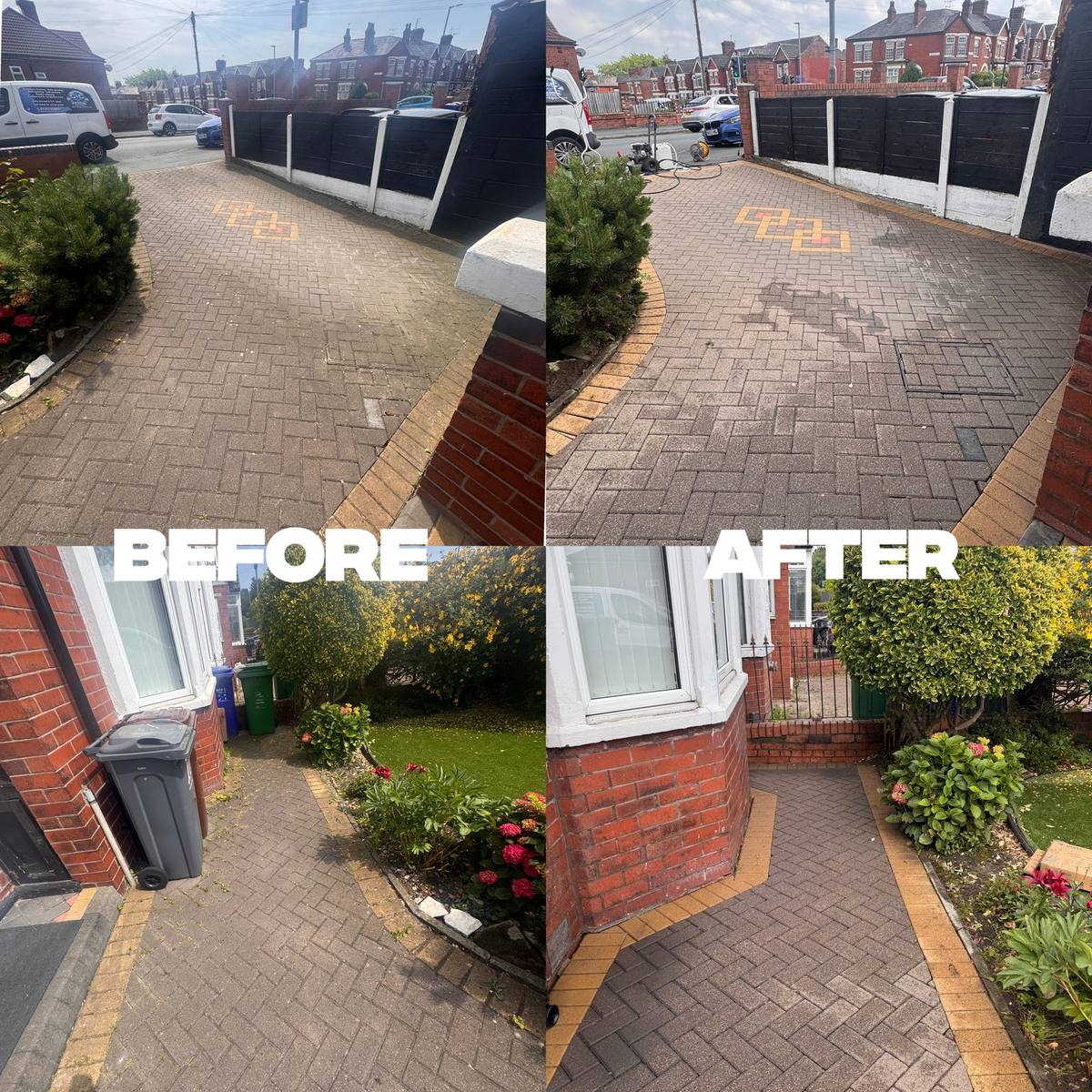
A typical Greater Manchester driveway — before and after a professional clean.
Quick answer: Driveway cleaning in Farnworth typically costs £80–£250 depending on size and surface type. A professional will pre-treat moss and algae, pressure wash the surface, and clear the joints. Most driveways take 2–4 hours and look dramatically better the same day.
Why Farnworth Driveways Get Dirty So Fast
The Greater Manchester climate is damp for a long stretch of the year. Even on days when it isn't actively raining, surfaces stay wet well into the morning and dry slowly in the afternoon light. That moisture is enough to sustain algae and moss growth, and once a surface is colonised, it spreads steadily through the joints and across the face of the paving. This is not a sign of neglect — it's just the weather doing what it does in the north-west.
North-facing driveways are particularly vulnerable. Without direct sunlight to dry them out between showers, they can stay damp for days at a stretch, which is exactly the condition algae thrives in. Black spot — the dark lichen patches that sink into the surface of block paving and concrete — takes longer to establish but is significantly harder to shift once it does. Clay-heavy soils common in and around Bolton also mean that surface water drains more slowly, which keeps the base of a driveway wetter for longer and encourages biological growth from the ground up.
Once you understand the conditions, the build-up makes sense. Farnworth driveways aren't dirtier than average because of anything the homeowner is doing wrong. They're dirty because the local climate provides near-perfect conditions for organic growth to take hold, and that growth needs periodic removal to keep the surface safe underfoot and looking reasonable.
The Most Common Driveway Surfaces in Farnworth
Block paving is the most common surface across Farnworth and the wider Bolton area — concrete blocks or clay pavers laid in a pattern over a compacted sub-base. It's durable and looks good when well maintained, but it has joints that fill with sand, and those joints are where weeds and moss get their footing first. Block paving responds well to professional cleaning, but it needs the right approach to avoid blasting all the jointing sand out in the process.
Imprinted concrete — sometimes called pattern-imprinted or stamped concrete — is also common on newer builds and driveways laid in the last fifteen years or so. It mimics the look of block paving or stone but is a single poured surface with a sealant layer applied on top. That sealant is there for a reason: it protects the surface and keeps the colour true. High pressure or harsh chemicals will strip it, and once it's gone, the concrete underneath stains easily and weathers badly. Imprinted concrete needs lower pressure and careful chemical selection.
Plain concrete and tarmac make up the remainder of what we see. Concrete is porous and absorbs oil and algae staining readily; it responds well to a thorough clean but some older oil stains will lighten rather than disappear entirely, and it's worth being upfront about that. Tarmac is the most pressure-sensitive of the four — older tarmac in particular can be damaged by high-pressure lances, so a surface cleaner set to an appropriate pressure is essential. Our related guide on concrete driveway cleaning goes into more detail if that's the surface you're dealing with.
What a Professional Driveway Clean Actually Involves
A proper driveway clean starts before the pressure washer is even switched on. A moss and algae treatment — typically a diluted biocide — is applied across the whole surface and left to dwell. Dwell time matters: the chemical needs time to penetrate and break down the biological growth rather than just sitting on top of it. Depending on the product and the level of contamination, that might be fifteen minutes or closer to half an hour. Rushing this step means the machine does more of the work, which usually means higher pressure and a higher risk of surface damage.
The actual cleaning is done with a rotary surface cleaner rather than a direct lance. A surface cleaner spins two jets beneath a shroud, delivering consistent pressure across a wide, even path. It's slower than a lance but it doesn't gouge the surface, doesn't leave the streaking marks a lance creates, and doesn't blast sand from block paving joints in the way that a direct jet will. After the main clean, the edges and any awkward corners are done by hand, and the whole surface gets a final rinse to clear the residue.
Done properly, a residential driveway takes between two and four hours. That includes setup, pre-treatment, cleaning, edging, and clearing away. If a quote sounds like it'll be done in forty-five minutes, ask what's being skipped. The shortcuts — no pre-treatment, lance instead of surface cleaner, no final rinse — are exactly what leads to a drive that looks worse six weeks later than it did before the job was done. If your drive also needs re-sanding after the clean, add more time on top of that.
How Much Does Driveway Cleaning Cost in Farnworth?
Pricing for driveway cleaning in Farnworth depends on size, surface type, and how heavily contaminated the drive is. A small single driveway — the kind that fits one car — typically starts from around £80. An average semi-detached drive, which most properties in this area have, usually falls in the £120–£180 range. Larger driveways, or those with heavy moss growth, oil staining, or several years of build-up, can run to £250 or more. Those are honest ballpark figures, not guarantees.
For block paving specifically, most professional cleaners price by the square metre. A basic clean runs from around £3.50/m², a clean with chemical treatment from £4.25/m², and a full restoration with re-sanding from £5.50/m². Re-sanding alone — if the surface has been recently cleaned — is typically around £2.00/m². These figures give you a reasonable framework for comparing quotes, though the total will still depend on the specifics of the job.
The only way to give an accurate quote is to see the drive — or at minimum, to see photos of it. Anyone giving you a firm price over the phone without that information is estimating, and that estimate can shift considerably once they're actually standing on the job. The quickest route to an accurate price is sending a few photos over WhatsApp, which gives a clear enough picture to quote from without anyone needing to travel out for a site visit first.
Block Paving: Cleaning and Re-Sanding Explained
Block paving is designed to be flexible. The blocks sit in a bed of sand, and the joints between them are also filled with sand — typically kiln-dried sand, which is fine enough to pack into the gaps and stabilise the whole surface. That jointing sand is what keeps the blocks locked in place and prevents them from shifting underfoot or under the weight of a vehicle. It also acts as a barrier that slows weed growth. When a deep clean is carried out, much of that sand comes out — and if it isn't replaced, you're left with open joints that become channels for weed seeds to settle into.
Re-sanding after a clean isn't an optional extra. It's part of finishing the job correctly. Kiln-dried sand is brushed into the joints and worked across the surface until the gaps are filled, then the surface is compacted and any excess blown off. Without this step, the blocks become unstable — not dramatically, but enough to develop slight movement over time, which eventually leads to uneven surfaces and cracked or rocked pavers. You can read more about the full process in our block paving re-sanding guide.
Some homeowners also ask about sealing after a clean and re-sand. Sealers are available in matt and gloss finishes and do provide a degree of protection against oil and staining, as well as helping bind the jointing sand. They're worth considering but they're not essential, and a sealed block paved drive still needs cleaning on a regular cycle — the sealer slows deterioration, it doesn't stop it. What it does do is make the next clean easier and extend the time between re-sands.
If your block paving joints are empty or weed-filled before a clean even takes place, mention it when you get a quote. It means re-sanding will definitely be needed, and pricing that in from the start avoids any surprises on the day.
When to Call a Professional Instead of DIYing It
A hired pressure washer from a tool hire shop will shift surface dirt and some loose growth, but it won't come with the rotary surface cleaner attachment that makes a real difference, and it won't come with the pre-treatment chemicals that do the heavy lifting against embedded algae and black spot. You'll also be working without the experience of knowing how much pressure a given surface can take — and that matters more than most people expect until they've stripped the sealant from imprinted concrete or blown sand from every joint on a block paved drive.
Block paving with low or empty joints is one situation where DIY consistently causes problems. Without the jointing sand as a buffer, a hire machine running at full pressure will displace blocks and create an uneven surface that needs professional repair. Imprinted concrete is another surface where DIY carries real risk — too much pressure or the wrong detergent strips the sealant, and re-sealing is an additional cost that typically outweighs what was saved on the original clean. Older tarmac surfaces are similarly vulnerable; a lance held too close will pull the surface aggregate loose.
For lightly soiled surfaces on relatively new driveways, a capable hire machine with care and restraint can do a reasonable job. For anything more involved — heavy moss growth, established black spot, block paving that needs re-sanding, or imprinted concrete — the risk of making the surface worse is high enough to make professional help the more cost-effective option. Our guide on how long a driveway clean actually lasts is also useful context if you're trying to work out whether the job is worth doing properly.
Practical Advice Before You Book a Driveway Clean
Before a crew arrives, move any vehicles off the drive completely — not just shifted to one side. The crew needs access to the full surface, and working around a car parked on the edge usually means the edges don't get done properly. Let them know in advance about any loose slabs, cracked blocks, or areas where the pointing has failed. That's not a reason the job can't go ahead, but it's useful to know before rather than during, and it means expectations around those areas can be set honestly from the start.
Take a photo of your driveway before the clean. It sounds obvious, but it gives you a genuine before-and-after comparison and is useful if you ever want to show the difference to a letting agent or prospective buyer. If re-sanding is needed, confirm it's included before work begins rather than treating it as an afterthought on the day. And if you're not sure whether your drive needs a seal after cleaning, ask — a straightforward answer is better than one you have to second-guess.
A clean driveway in Greater Manchester won't stay clean indefinitely — the climate won't allow it. But staying on an annual or biannual maintenance cycle means each clean is straightforward and the cost stays predictable. Leaving it three or four years means heavier contamination, more time on site, and sometimes restoration work rather than a standard clean. C&C Precision Precision Washing covers Farnworth and the surrounding Bolton area, and you can get a fast quote by sending photos over WhatsApp. The Chadderton driveway cleaning guide is worth a read if you're curious how results vary by location and surface across Greater Manchester.
Frequently asked questions
How long does driveway cleaning take in Farnworth?
Most residential driveways take between 2 and 4 hours depending on size and how heavily soiled the surface is. Larger driveways or those needing re-sanding will take longer. We always aim to leave the same day with the job fully finished.
Will pressure washing damage my block paving or imprinted concrete?
Not if it's done correctly. A rotary surface cleaner is used instead of a direct lance, which spreads the pressure evenly and avoids gouging the surface or blasting sand from the joints. Imprinted concrete needs particular care around its sealant layer — high pressure or the wrong chemicals will strip it.
How often should a driveway be cleaned in the Greater Manchester area?
Once a year is enough for most driveways in this part of the north-west, though heavily shaded drives or those under trees may need attention every 6–8 months. Keeping on top of it annually is cheaper in the long run than letting moss and algae build up to the point where restoration work is needed.
Do you cover Farnworth and the rest of Bolton?
Yes — Farnworth sits within our regular Bolton area and we cover the wider Greater Manchester region including Rochdale, Oldham, Bury, Tameside, and Stockport. The quickest way to get a price is to send photos of your driveway on WhatsApp and we'll come back to you fast.
Want a price for your Farnworth driveway?
Send us a couple of photos on WhatsApp and we'll come back to you with a fast, honest quote — no sales call needed.