Oil gets onto driveways easily enough — a leaking sump, a splash when changing your oil, a drip from a delivery vehicle sitting on the block paving. What surprises most people is how quickly a manageable spill turns into something that resists every cleaning product under the kitchen sink. If you're trying to remove oil stains from a driveway and getting nowhere, you're not alone. It's one of the most common jobs we're asked about across Greater Manchester, and the difficulty is almost always down to two things: the wrong products and leaving it too long.
This guide covers what's actually happening when oil stains a surface, which treatments genuinely work and which are a waste of time, and when it makes sense to call in professional equipment. There's no magic solution that works on everything — surface type, stain age and what the oil actually is (engine oil, hydraulic fluid, cooking oil) all affect the outcome. But with the right approach, even stubborn stains can usually be significantly reduced, and fresh ones can often be cleared completely.
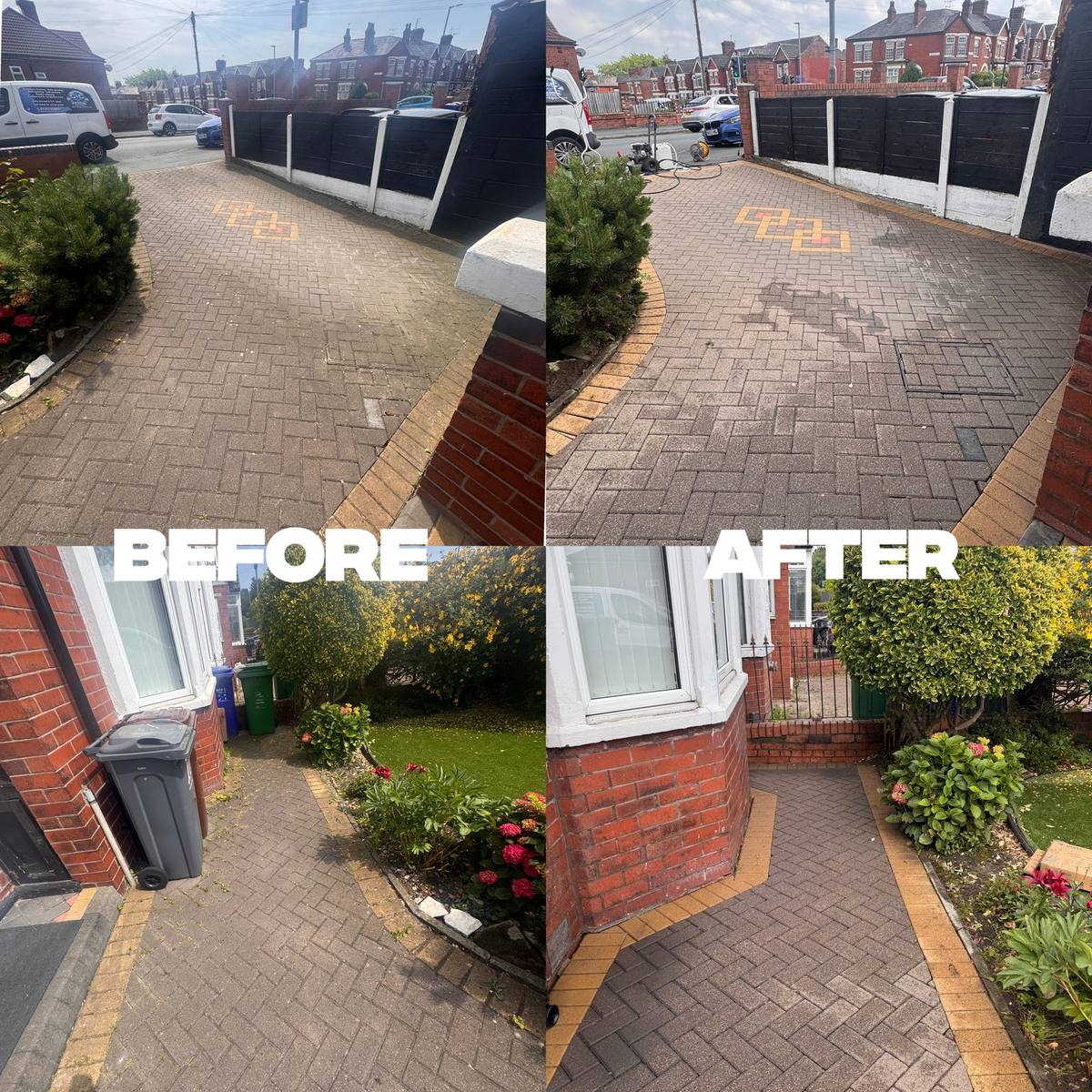
A wide concrete driveway in Greater Manchester — before and after a professional clean. Oil and tyre residue had built up over years.
Quick answer: To remove oil stains from a driveway, apply a degreaser or neat washing-up liquid, agitate with a stiff brush, leave to dwell, then rinse with a pressure washer. Fresh stains respond well to DIY treatment. Old or deeply ingrained oil often needs professional hot water pressure washing and a commercial-strength degreaser to fully lift.
Why Oil Stains Are Stubborn in the First Place
Oil is hydrophobic — it repels water, which is why cold water alone never shifts it. When it lands on a porous surface like concrete, block paving or natural stone, it doesn't just sit on top waiting to be wiped away. It starts to migrate into the surface immediately, drawn down by gravity and absorbed into the tiny air pockets within the material. Concrete and uncoated block paving are particularly porous, and in the damp North West climate, surfaces that have been repeatedly wet and dried tend to develop even more microscopic cracks and pores over time.
Once the oil is inside the substrate rather than on it, water-based cleaners have no way of reaching it effectively. Oil and water don't mix, so the cleaning agent slides past the stain without actually making contact with it at a molecular level. What you need is an alkaline degreaser — something that breaks down the fatty acid chains in the oil and allows water to rinse it away. Without that chemical action, you're essentially just getting the surface wet around the stain.
The longer the oil sits, the more it cures and binds to the surface. Heat accelerates this — a warm tarmac or sun-heated concrete slab will absorb a spill faster than the same surface on a grey October morning. In practice, this means the clock starts the moment the oil lands, and what's a 20-minute job on day one can become a half-day project by the end of the week.
Fresh Oil vs. Old Oil: The Treatment Is Different
A spill caught within a few hours is a very different problem to one that's been sitting for a month. Fresh oil hasn't yet bonded to the substrate — it's absorbed into the top layer but hasn't migrated deep into the material. At this stage, household degreasers, washing-up liquid applied neat, or a dedicated driveway degreaser from a builders' merchant can do a reasonable job. Apply the product, work it in with a stiff-bristled brush, leave it for 10–15 minutes to dwell, then rinse with hot water if you have it or a pressure washer.
Old oil — anything more than a few days, and certainly anything measured in weeks or months — has worked its way down into the surface and started to cross-link with the material. At this point you're not cleaning the surface, you're trying to draw something back out of it. Commercial-strength alkaline degreasers will still make a visible difference, but you're unlikely to achieve a complete removal with domestic equipment. Managing your expectations here matters: the goal with an old stain is often significant improvement rather than an invisible result. Some staining, particularly on pale concrete, may lighten considerably but still show a shadow where the oil was.
It's worth being honest about this. Anyone who tells you a single product will make a six-month-old engine oil stain disappear entirely on unsealed concrete is overselling it. The chemistry has limits, and so does the mechanical action of a standard consumer pressure washer.
What Actually Works: Proven Methods Ranked
For a spill that's still wet or was only just noticed, your first move should be to cover it with something absorbent — cat litter, dry sand, even a handful of flour in a pinch. Press it in, leave it for 20–30 minutes, sweep it up and dispose of it. This won't remove the stain, but it stops more oil penetrating while you get the cleaning products ready. Don't skip this step with a fresh spill by going straight to water; you'll just drive the oil deeper.
Once you're into the cleaning stage, a dedicated alkaline driveway degreaser is the most reliable domestic option. Washing-up liquid works on very fresh, light spills because it contains surfactants that surround oil molecules and allow them to be rinsed away, but it's not strong enough for anything that's had time to set. Apply the degreaser neat to the stain, work it in with a stiff brush, and allow proper dwell time — typically 15–30 minutes depending on the product instructions. Baking soda paste (bicarbonate mixed to a thick consistency with a little water) is sometimes recommended and can help lift light surface contamination, but it's mildly alkaline and won't touch anything that's penetrated more than a few millimetres.
The most effective approach for anything beyond a very fresh spill is hot water pressure washing with a rotary surface cleaner, combined with a commercial degreaser pre-treatment and appropriate dwell time. Hot water genuinely outperforms cold — it lowers the viscosity of the oil and makes the degreaser more active. A rotary surface cleaner (the spinning disc attachment rather than a lance) applies even pressure across the whole surface and avoids the streaking that a single lance can cause. This is the combination professional driveway cleaning services use, and the gap in results between this and a consumer pressure washer with cold water is significant.
What Doesn't Work (And Wastes Your Time)
Cola is a popular home remedy that gets passed around online and doesn't do what people think it does. The mild phosphoric acid in cola is useful for dissolving limescale; it has no meaningful degreasing action and won't break down engine oil chemistry. You'll end up with a sticky surface that attracts dirt. Vinegar has the same problem — it's a weak acid, useful for certain mineral deposits, entirely the wrong chemistry for oil.
Petrol or other solvent-based products will dissolve oil, but they do so by spreading it across a larger area rather than removing it, and you're left with a bigger, thinner stain plus a surface contaminated with flammable solvent. On tarmac, petroleum solvents can actively soften and damage the surface itself. Don't use them. Bleach is covered in more detail in the FAQ below, but the short version is that it's an oxidiser, not a degreaser — it won't lift oil and can damage jointing sand and surrounding materials.
Cold water alone, with or without pressure, just spreads the stain. Oil doesn't dissolve in water at any temperature achievable from a domestic tap or pressure washer, so all you're doing is moving it outwards into a larger area. If you've only got cold water available, combine it with a degreaser and brush action — never use water on its own as a first response to an oil spill.
Does the Surface Type Change the Approach?
Yes, and it's worth knowing your surface before reaching for strong chemicals. Plain concrete is porous and will absorb oil quickly, but it's robust enough to handle alkaline degreasers and firm brush work without damage. Imprinted concrete (pattern imprinted concrete driveways) is typically sealed, which is actually an advantage — the oil sits on the coating rather than getting into the concrete beneath, so fresh spills are much easier to deal with. The risk there is using harsh chemicals or abrasive tools that scratch or strip the sealant.
Block paving presents its own challenge because the kiln-dried sand or polymeric jointing sand between the blocks can absorb oil and hold it in the joints. Even after the surface blocks look clean, the joints can remain stained and continue to leach oil back upward. A thorough block paving clean followed by re-sanding with fresh kiln-dried or stabilised jointing sand is sometimes the only way to fully address this — you're replacing the contaminated material rather than trying to clean it in place. For context on what's involved in that process, the guide to block paving cleaning in Oldham goes into the detail of what a proper restoration looks like.
Tarmac is the most vulnerable surface. It's petroleum-based itself, so aggressive solvent degreasers or anything too acidic can soften the binder and cause the surface to become tacky or start to break up. Use a gentler, pH-appropriate degreaser on tarmac, avoid stiff wire brushes, and never apply anything petroleum-based to it. If in doubt, test a small inconspicuous area first.
When DIY Isn't Enough: Calling in a Professional
There are clear signs it's time to stop spending money on products and call someone in. If the stain is more than a week or two old, covers a significant area, has been scrubbed repeatedly without success, or you're working with a surface like tarmac where you're wary of causing damage — professional hot-wash pressure cleaning with a commercial degreaser will get a better result than anything available to a homeowner. Commercial degreasers are considerably stronger than retail versions, and hot water equipment runs at temperatures and pressures that domestic machines can't match.
There's also a practical point worth considering. Treating a single oil stain in the middle of a driveway that hasn't been cleaned in a few years will leave you with a noticeably clean patch surrounded by a dirty surface — possibly more obvious than the original stain. A full driveway clean treats everything at once, and the result is consistent across the whole area. C&C Precision Precision Pressure Washing covers Oldham and the wider Greater Manchester area, and quotes are straightforward — customers send a couple of photos over WhatsApp rather than waiting for a site visit.
For block paving in particular, a professional clean often makes sense as a complete package. Pricing for block paving work runs from around £3.50/m² for a clean, £4.25/m² with a chemical treatment included, and £5.50/m² for a full restoration with re-sanding. Re-sanding on its own, if the surface has already been cleaned, is around £2.00/m². The block paving re-sanding page explains what's involved in that process if you want the detail.
Preventing Oil Stains Coming Back
The most reliable prevention measure is speed. Catching a spill within the first hour and using absorbent material before any cleaning products makes the job trivial compared to dealing with it a week later. Keep a small bag of cat litter or fine sand in the garage alongside a bottle of driveway degreaser — the combination is cheap, takes up almost no space, and turns an oil spill from a significant cleaning job into a 30-minute task.
For longer-term protection, a driveway sealant applied after a professional clean creates a barrier between the surface and anything that lands on it. Oil, fuel and other contaminants sit on the coating rather than penetrating the block, concrete or stone beneath, making them far easier to wipe or rinse away before they can cause lasting staining. Sealants do wear over time and need reapplying, typically every two to five years depending on the product and traffic levels, but the reduction in maintenance effort between applications is worth it on most surfaces.
If you can only do one thing after reading this: keep a bottle of alkaline driveway degreaser in the garage and use it the same day as any spill. Apply it neat, scrub it in, give it 20 minutes dwell time, then rinse with the hottest water you have. The difference between treating a spill on day one versus day seven is the difference between a surface that looks fine and one that needs professional equipment to restore.
If you've dealt with oil and are now noticing other surface issues — algae, moss or general greening — the guide on why driveways go green in winter covers what's behind that and what actually stops it coming back.
Frequently asked questions
Can I use bleach to remove oil stains from my driveway?
No — bleach doesn't break down oil. It's an oxidiser, not a degreaser, so it won't lift the stain; it'll just lighten the surrounding surface and potentially damage block paving jointing sand or tarmac. Stick to a proper alkaline degreaser for oil.
How long does it take for an oil stain to become permanent?
There's no hard deadline, but the longer oil sits, the deeper it penetrates — especially on porous concrete or unsealed block paving. A stain left for more than a week becomes significantly harder to remove at home. After several months, full removal without professional equipment is unlikely.
Will pressure washing alone remove oil stains from a driveway?
Cold water pressure washing on its own will rarely shift an oil stain — it just spreads it. You need a degreaser applied first and left to dwell, then rinsed with a hot water pressure washer and a rotary surface cleaner for the best result. Pre-treatment is the key step most DIYers skip.
How much does professional oil stain removal cost in Greater Manchester?
It depends on the size of the driveway and how badly stained it is — most customers get a quote by sending a photo over WhatsApp rather than waiting for a site visit. A driveway clean including degreasing treatment typically starts from around £80–£120 for a standard single drive, but the easiest way to get an accurate price is to send us a couple of photos.
Got an oil stain that won't budge?
Send a photo over WhatsApp and we'll give you a fast, no-nonsense quote for driveway cleaning in Greater Manchester.