Managing a portfolio of properties across Greater Manchester brings a long list of recurring responsibilities, and exterior condition is one that often gets pushed down the list until something goes wrong. Whether you're a letting agent preparing between tenancies, a landlord with several terraced houses, or a housing association maintaining communal areas, property manager exterior cleaning is rarely as straightforward as booking one contractor for one job. Surfaces vary, access varies, and the North West climate — persistent damp, frequent rain, low winter sun — means biological growth comes back faster here than in drier parts of the country.
This guide covers what a managed exterior clean typically involves, how to organise it across multiple sites, and where the lines are between what can reasonably be done in-house and what needs professional equipment and insurance. The aim is to give you enough detail to make good decisions, not to sell you anything.
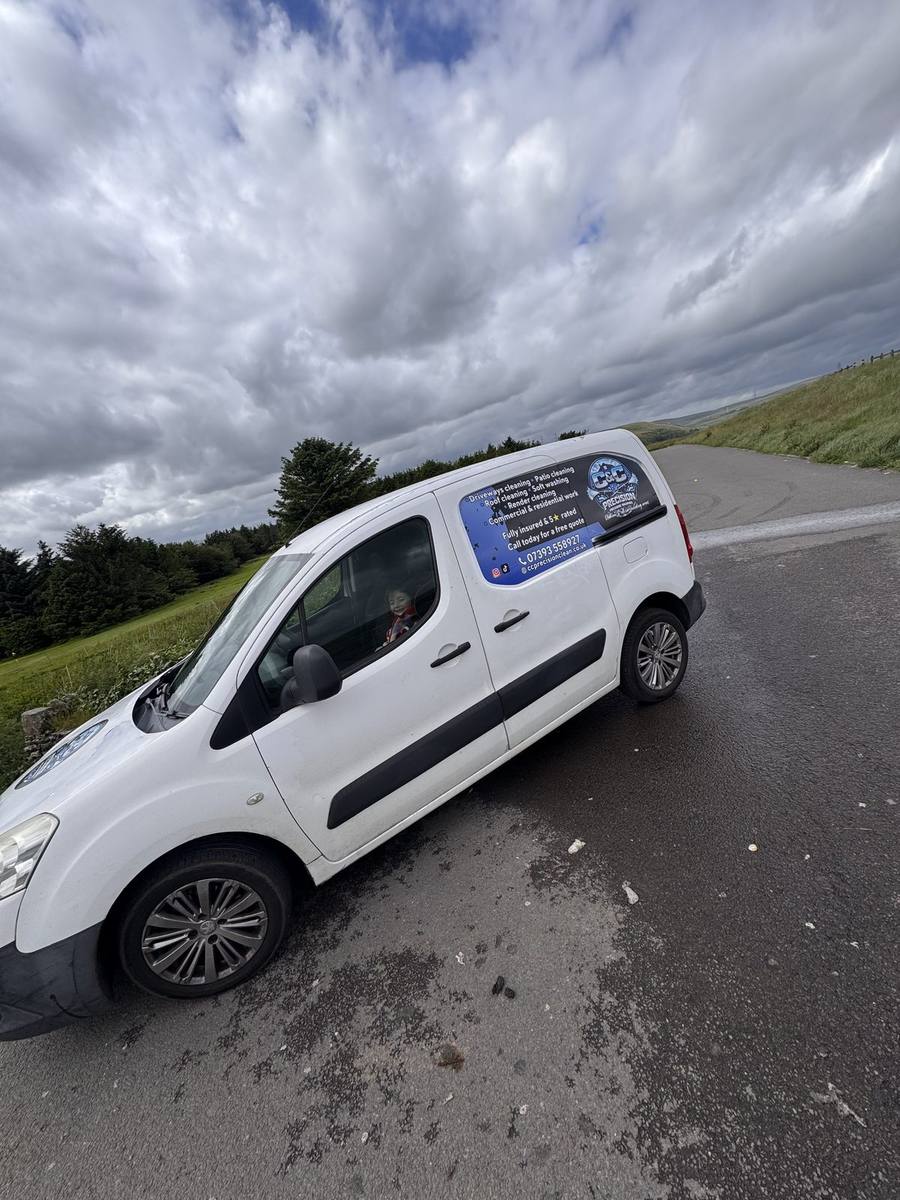
On-site across Greater Manchester — driveways, patios, render and more for landlords, letting agents and housing associations.
Quick answer: Property manager exterior cleaning covers driveways, patios, render, paths and car parks across a managed portfolio — kept clean between tenancies or on a scheduled cycle. C&C Precision serves landlords, letting agents and housing associations across Greater Manchester with fast quotes via WhatsApp photo.
Why Exterior Cleaning Matters for Managed Properties
Kerb appeal is the obvious starting point, but for managed properties the reasoning goes deeper. A property with a grimy driveway, moss-covered path or algae-stained render signals to tenants — and prospective tenants — that maintenance standards are low. That affects both occupancy rates and the quality of applicants you attract. In a competitive rental market across towns like Rochdale, Bury and Stockport, first impressions carry real weight.
There is also the question of asset value. Block paving that has been left without re-sanding for several years starts to shift, sink and lose jointing sand to the point where it needs partial or full relay rather than just cleaning. Render that has been left green with algae for two or three winters can begin to trap moisture behind the surface. Roofs left covered in moss hold water against the substrate. These are not cosmetic problems — they become structural ones that are significantly more expensive to put right than the cleaning that would have prevented them.
For letting agents and housing associations specifically, there is a compliance dimension too. Communal walkways, bin stores and car parks that are visibly neglected can attract complaints and, in some cases, create slip hazards that become liability issues. Property manager exterior cleaning, approached as a scheduled maintenance task rather than a reactive one, is much cheaper and less disruptive than dealing with the fallout.
What's Typically Included in a Portfolio Clean
The range of surfaces across a managed portfolio is usually wider than people expect when they first start thinking about this. Driveways and block paving are the most common — many rental properties across Greater Manchester have block paved drives or tarmac forecourts that haven't been properly cleaned in years. Driveway cleaning removes compacted dirt, oil staining, weeds and biological growth, and the difference it makes to a property's appearance is usually significant.
Patios and rear yard areas also need attention between tenancies, particularly for properties with shared outdoor space. Patio cleaning covers everything from traditional flags and concrete slabs through to porcelain, and the approach differs depending on the material. Render is another surface that comes up regularly on older terraced and semi-detached properties — softwashing is the correct method here, covered in more detail below. Communal areas, bin stores and car parks round out the picture for larger managed sites. You can read more about communal walkway cleaning in a separate guide if that's a particular concern.
Roof cleaning and moss removal is increasingly requested by landlords who are either preparing a property for sale or responding to surveyor comments. It is not a minor job — it involves working at height with chemicals — but it makes a meaningful difference to both appearance and the longevity of the roof covering.
Softwashing vs Pressure Washing: What Gets Used Where
Pressure washing is not the right tool for every surface, and understanding the difference matters if you are responsible for a range of property types. High-pressure water is effective on hard, robust surfaces — concrete, block paving, natural stone — where the mechanical force dislodges compacted dirt and biological growth without damaging the substrate. For these surfaces, block paving cleaning and stone cleaning done at the correct pressure produces excellent results.
Softwashing is a different approach entirely. It uses a diluted sodium hypochlorite solution — applied at low pressure — to kill algae, lichen, moss and other organic growth at the biological level rather than physically blasting it away. This matters because pressure washing render, for example, can force water behind the coating, damage the finish and, on some modern renders, void the manufacturer's warranty. Softwashing treats the surface without that risk, and because it kills the organism rather than just removing the visible growth, results tend to last longer. The chemical needs to dwell on the surface for a period before rinsing — dwell time varies depending on the level of contamination and the temperature on the day.
Roofs are another surface where softwashing is the correct method. Using high pressure on roof tiles — particularly older clay or concrete tiles — risks dislodging the granule surface, cracking brittle tiles or stripping weatherproofing. A softwash approach with the appropriate biocide concentration treats moss and algae safely, with the dead growth gradually washing away over the following weeks. This is not a job for a consumer pressure washer and a YouTube tutorial.
How Scheduling Works Across Multiple Properties
For property managers, timing is often as important as the work itself. The most practical approach for residential portfolios is to tie exterior cleaning to the tenancy cycle — particularly end-of-tenancy periods when the property is empty and access is straightforward. A clean driveway, yard and front elevation before a new viewing or a new tenant moving in takes a property from looking tired to looking maintained, which directly affects first impressions and the speed of re-letting.
Annual or biannual cycles work better for roofs, render and communal areas, where the goal is maintenance rather than turnover preparation. In the North West, autumn and early winter are when biological growth is most visible and when it causes the most moisture-related problems, so scheduling cleans for late summer or early autumn makes practical sense. That said, most exterior cleaning can be carried out year-round — cold weather slows chemical dwell times slightly, but it does not prevent the work being done.
Co-ordinating across multiple sites is made considerably simpler when you can send photos over WhatsApp rather than arranging a site visit for every property. A clear photo of the surface, its approximate dimensions and a description of the access situation is usually enough to price most residential jobs. For larger commercial sites or portfolios with significant variation in scope, a site visit makes more sense, but that is the exception rather than the rule.
Block Paving, Re-Sanding and Keeping Driveways Compliant
Block paving is one of the most prevalent surface types across rental properties in Greater Manchester — laid extensively through the 1990s and 2000s, and found on everything from terraced forecourts to suburban driveways. The problem is that without maintenance, it degrades in a predictable sequence. Jointing sand washes out, weeds establish themselves in the gaps, the blocks start to rock and shift, and water sits on the surface rather than draining through. What started as a functional driveway becomes a trip hazard and an eyesore.
Cleaning alone — removing the dirt, weeds and biological growth — brings the surface back visually and is typically priced from around £3.50 per square metre for a standard clean, rising to around £4.25 per square metre if a chemical treatment is included to address algae and lichen properly. But if the jointing sand has significantly depleted, cleaning without re-sanding just leaves the blocks vulnerable. Block paving re-sanding with kiln-dried sand restores the structural integrity of the surface, prevents further weed growth and stops the blocks moving underfoot. Re-sanding only runs from around £2.00 per square metre; a full restoration combining clean, treatment and re-sand comes to approximately £5.50 per square metre. For most neglected block paved driveways, that full restoration is what actually makes the difference long-term.
If block paving has been left for more than three or four years without maintenance, assume re-sanding will be needed as well as cleaning. Cleaning without replacing the jointing sand leaves the structure unstable and the surface will deteriorate again quickly — especially through a wet Greater Manchester winter.
There is also a drainage compliance point worth noting. Block paving is classified as a permeable surface for planning purposes, but only when it is properly jointed and maintained. If jointing sand is absent and water is pooling and running off rather than draining through, the surface is not functioning as intended. For landlords and property managers with properties subject to planning conditions, this is worth being aware of.
When to Call a Professional Rather Than DIY or Groundskeeping Staff
There are jobs that groundskeeping staff or a competent handyman can reasonably take on — sweeping communal paths, clearing gutters at low level, pulling weeds from block paving. There are others where using the wrong equipment or technique creates more problems than it solves. Render softwashing with sodium hypochlorite requires the correct dilution for the surface and contamination level — too strong and it can bleach or damage the render; too weak and it doesn't kill the growth properly. The same principle applies to roof cleaning, where working at height without the right access equipment and training is a health and safety matter, not just a quality one.
Pattern imprinted concrete — common on driveways across the region — requires careful pressure management and, if sealing is needed afterwards, the right sealer type for the existing finish. Applying a solvent-based sealer over an existing water-based one, or vice versa, causes delamination and whitening that is difficult and expensive to correct. If you want to understand more about how long sealed driveways actually last in Greater Manchester conditions, there is a separate guide on driveway sealing worth reading before making decisions.
For property managers, the liability dimension is also real. If a contractor without adequate insurance damages a render finish, strips tiles, or causes a slip injury on a communal area they were cleaning, the responsibility chain matters. C&C Precision Pressure Washing carries £1,000,000 public liability insurance covering both residential and commercial managed sites, and proof of insurance is available on request — which most letting agents and housing associations will require before works begin.
What to Send Us and How to Get a Fast Quote
The quickest way to get pricing — whether for a single property or a portfolio of sites — is to send photos over WhatsApp. For most surfaces, a clear photo showing the surface type, approximate scale and current condition is enough to provide an accurate quote without a site visit. If you can include a rough measurement or the dimensions from your property details, that speeds things up further. Access information is useful too — whether there is a gate, parking nearby, or any constraints around tenant presence.
For letting agents and housing associations managing multiple sites, it is worth thinking about batching properties in the same area — Oldham, Rochdale, Bury, Tameside and across Greater Manchester — so that scheduling is efficient and any travel time is minimised. You don't need to have everything organised before making contact; many property managers send through a mix of addresses and photos and we work through pricing from there.
All work is covered under £1,000,000 public liability insurance and we maintain a 5.0 Google rating across customer reviews. If you want to see what previous clients have said, the reviews page has the detail. The process is straightforward: send photos, get a price, confirm the date. No long waits, no unnecessary site visits for jobs that can be quoted from photos.
Frequently asked questions
Do you work with letting agents and housing associations as well as individual landlords?
Yes — a significant part of the work we do is for letting agents, landlords and housing associations across Greater Manchester. We're used to working around tenancy schedules, dealing with multiple contacts and turning jobs around quickly. Just send photos over WhatsApp and we'll get pricing back to you fast.
Can you clean render and roofs on managed properties — not just driveways and patios?
Yes. We softwash rendered exteriors using sodium hypochlorite, which kills algae, moss and organic growth at the source rather than just blasting it off. We also clean roofs and remove moss. These are jobs that need the right chemical dilution and technique — done wrong they can damage the surface or invalidate warranties.
How do you quote for multiple properties without visiting each one?
For most jobs, a clear photo over WhatsApp tells us everything we need to price the work — surface type, approximate size, level of soiling and access. For larger commercial sites or portfolios where scope varies a lot, we'll arrange a site visit. Either way, we aim to get pricing back to you quickly.
Are you insured to work on commercial and managed residential sites?
Yes — we carry £1,000,000 public liability insurance, which covers both residential and commercial work including managed properties, retail parks and communal areas. We can provide proof of insurance on request, which most letting agents and housing associations will ask for before any work starts.
Managing a property in Greater Manchester that needs a quote?
Send a few photos over WhatsApp and we'll get you a price back fast — no site visit needed for most jobs.