If you're planning to prepare your home exterior for winter, the window to act is shorter than most people think — particularly in Greater Manchester, where the wet season arrives early and temperatures can drop fast by November. A few hours spent on the right surfaces in September or October can prevent the kind of damage that costs far more to repair in spring. This guide covers what to prioritise, in what order, and why some things are better left to a professional.
This isn't about having the cleanest driveway on the street. It's practical: algae, moss and trapped moisture behave differently once frost arrives, and surfaces that look fine now can deteriorate quickly through a cold, wet winter if they're carrying organic growth or compromised jointing. Getting ahead of that is straightforward if you know what to look for.
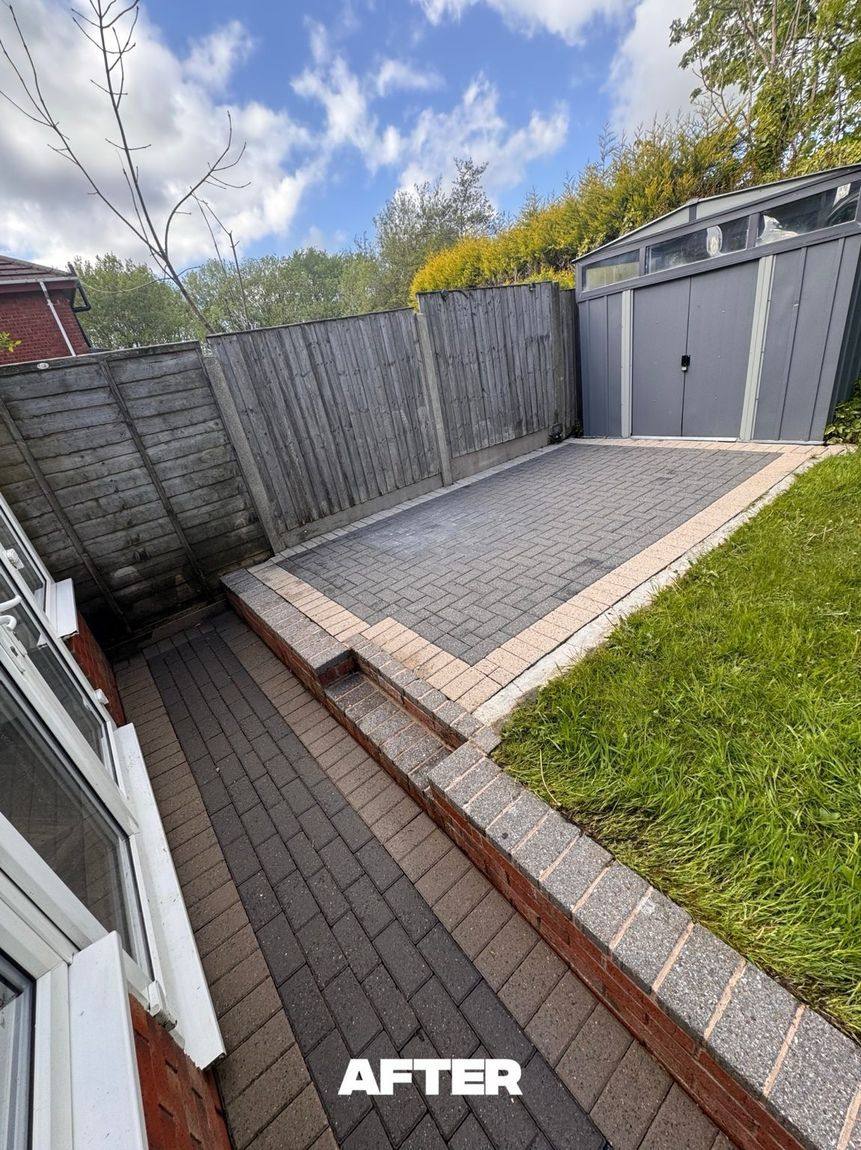
Autumn clearance and deep clean — the right time to get on top of moss, weeds and organic build-up before the first frost.
Quick answer: To prepare your home exterior for winter, clear gutters, remove moss and algae from roofs and paths, clean and re-sand block paving before frost sets in, softwash rendered walls to stop algae spreading, and pressure wash hard surfaces while temperatures are still above freezing. Doing this in autumn protects surfaces from freeze-thaw damage and saves costly repairs.
Why Autumn Is the Right Window — Not Spring
The instinct for most homeowners is to clean up after winter — wait for the weather to improve, then deal with whatever the cold months have left behind. That approach is understandable, but it gets the timing backwards. The damage happens during winter, not after it. If moss is sitting in your roof tiles in October, it will hold water against the surface all the way through until March. If algae has taken hold on a patio or render, cold damp conditions are exactly what it needs to spread further.
Freeze-thaw cycles are the main culprit. Water expands when it freezes, and if it's sitting in joints, cracks or beneath organic growth, that expansion gradually forces surfaces apart. Block paving joints lose their sand, flags start to rock, and on render or stonework, small cracks become larger ones over successive cycles. Treating surfaces while they're still relatively dry, and while cleaning solutions can work at proper temperatures, prevents this chain of events rather than reversing it.
In practical terms, that means September through to mid-October is the target window for most of Greater Manchester. By November, night temperatures become unreliable, and a freshly cleaned wet surface that freezes overnight creates its own problems. Acting early gives surfaces time to dry and stabilise before the hard weather arrives.
Driveways and Block Paving: Clear Weeds, Re-Sand and Check the Surface
Block paving looks solid, but it relies on tight joints filled with kiln-dried sand to hold everything in place and shed water properly. Weeds and moss growing in those joints are more than a cosmetic problem — they hold moisture directly against the surface and, as plant roots work deeper, they gradually open the joints further. Going into a frost with loose, weed-filled joints is one of the more reliable ways to end up with a sunken or lifted section of paving by spring.
A thorough driveway cleaning in autumn removes the organic material, kills off moss and weed growth, and leaves the surface in a state where the joints can be properly assessed. If the sand is visibly low — you can see gaps, or flags move slightly underfoot — block paving re-sanding with kiln-dried sand locks everything back in place before water has the chance to penetrate and freeze underneath. Pricing for block paving cleaning typically starts around £3.50/m² for a straightforward clean, rising to around £4.25/m² if a chemical treatment is included for moss and algae, and up to £5.50/m² for a full restoration including re-sanding. Re-sanding alone, if the surface is already clean, runs around £2.00/m².
While you're having the surface cleaned, it's worth walking the area carefully for cracked, rocking or noticeably sunken blocks. Water finds its way into any gap, and once it freezes, a small problem becomes a larger one. Those areas are worth flagging to whoever is doing the work — they may be straightforward to address now and significantly less so after a hard winter.
Patios and Paths: Remove Algae Before It Gets Worse
Algae on a patio or path feels slightly slippery underfoot in summer. By December, with leaves sitting on top and regular rainfall, that same surface becomes genuinely hazardous. More importantly, algae actively damages natural stone over freeze-thaw cycles — it holds water against the surface and, as it spreads through microscopic pores, the freeze-thaw process accelerates surface erosion and staining. On sandstone in particular, this can mean significant colour change and surface pitting over a few winters if left untreated.
Porcelain is less porous and more resistant to freeze-thaw damage than natural stone, but it still needs clearing — algae on a hard, smooth porcelain surface is particularly slippery, and accumulated organic debris in the joints or around the edges will degrade pointing over time. A professional patio cleaning in autumn, using the right pressure and technique for the surface type, removes the biology rather than just moving it around. On sandstone, lower pressure with longer dwell time on chemical treatment gets better results than blasting at high pressure, which can pull the surface apart.
If your patio looked uneven or patchy after a previous clean, that's usually down to surface variation or residual staining rather than the clean itself — the guide on why your patio looks patchy after cleaning covers that in detail. Autumn is also the right time to clear side paths and back passages of debris — shaded paths that get little sun stay damp all winter and are where algae tends to establish fastest.
Roofs and Conservatory Roofs: Deal With Moss Now
Moss on a roof is often dismissed as cosmetic, but it functions like a sponge — it absorbs and holds rainwater, keeping tiles damp long after rain has stopped. Over winter that trapped moisture works under tile edges, into mortar and, as it freezes, gradually lifts tiles and opens pointing. Blocked or overflowing gutters — often the result of moss washing down from the roof — cause their own set of problems with fascias, soffits and the ground immediately below the roofline.
The right approach for pitched roofs is softwashing rather than pressure washing. High-pressure washing on a tiled roof dislodges granules from felt, can crack brittle tiles and sends moss fragments into gutters and downpipes. A biocide treatment applied with low pressure kills the moss at the root; the dead material then loosens and washes off gradually over subsequent rainfall. It's less dramatic to look at than a pressure wash but it's significantly safer for the roof structure. This is covered in more detail in the guide on roof cleaning costs and what affects the price.
Conservatory roofs, particularly polycarbonate panels, are frequently overlooked. They accumulate algae and airborne debris quickly, the material is easily damaged by high pressure, and a dirty conservatory roof lets in noticeably less light through winter. Softwashing at low pressure is the correct method here too — the same chemistry that works on render and roof tiles works on polycarbonate without the risk of surface crazing.
Rendered Walls and Pebbledash: Softwash Before the Cold Sets In
Render — whether K-rend, monocouche, traditional sand-and-cement or pebbledash — tends to show algae and red algae growth fairly quickly in the North West. Oldham, Rochdale and the higher ground around Saddleworth get enough consistent damp to make this an almost annual issue on north and west-facing elevations. The biology grows fastest in cool, wet conditions, which means an untreated wall going into October will look significantly worse by February than it did in September.
Softwashing with sodium hypochlorite kills algae, lichen and organic growth at the root rather than simply washing the surface clean. It's the appropriate method for render because it doesn't rely on mechanical force — the chemical does the work, which means no risk of blasting K-rend or monocouche surfaces that would be damaged by high-pressure washing. There's more detail on the specific considerations for coloured render in the guide on K-Rend cleaning done properly. Autumn treatment is more effective than winter treatment because sodium hypochlorite's efficiency drops off as temperatures fall below around 5–8°C — the dwell time required increases, and below that threshold results become less reliable.
Pebbledash responds well to softwashing but the uneven surface holds debris and organic material more readily than smooth render, so it benefits from a rinse stage after the chemical has done its work. If there are cracks in the render — even hairline ones — worth noting them before winter. Water getting into a render crack and freezing will open it further, and by spring what was a minor cosmetic issue can be a more significant repair.
If you're unsure whether your render needs softwashing or a more involved repair first, photograph it in good light from a few angles and send it to a professional before booking anything. Softwashing over a render surface with active cracks or areas of poor adhesion can force water behind the coating — it's better to know what you're working with.
When to Call a Professional Rather Than DIY
A domestic pressure washer is a useful tool for some jobs — shifting loose mud from a path, or giving a concrete step a quick rinse. It's less suited to work that requires controlled pressure, specific chemicals at the right dilution, or any access above ground level. Blasting jointing sand out of block paving with a domestic machine is one of the more common self-inflicted problems — the paving looks cleaner but it's left structurally looser than it was before, and re-sanding a driveway yourself is awkward to do properly without the right equipment. Similarly, a domestic pressure washer on K-rend or coloured monocouche render can strip the surface layer, which is a costly mistake.
Height is the clearest reason to use a professional. Roof work, high gable-end render and anything requiring a ladder or scaffold should come with proper public liability insurance — at minimum £1 million, ideally verified before anyone starts work. It's worth asking to see documentation rather than taking it on trust. If something goes wrong on your property — a tile broken, a gutter cracked, a person injured — you need to know there's cover in place. C&C Precision Precision Pressure Washing carry £1 million public liability and can quote from photos sent over WhatsApp, which keeps the process straightforward.
For delicate surfaces — sandstone, pattern imprinted concrete, polished porcelain, K-rend — the risk of irreversible damage from the wrong technique or pressure is real enough that professional assessment is worth the cost. Some staining on natural stone will lighten rather than disappear entirely regardless of who cleans it; a professional will tell you that upfront rather than promising results they can't guarantee.
A Practical Autumn Checklist Before Winter Hits
Working through this list by the end of October puts most homes in a reasonable position going into the colder months. In Greater Manchester that's a realistic deadline — November can bring early frosts, and once temperatures are consistently low, the window for effective cleaning and treatment closes.
- Gutters cleared of leaves and debris, downpipes checked for blockages
- Roof moss treated with biocide or soft-wash treatment — don't rely on clearing gutters alone if moss is present on the tiles
- Driveway and block paving cleaned, weeds and moss removed, joints assessed and re-sanded where low or compromised
- Patio and paths cleared of algae and organic debris — natural stone in particular needs this before freeze-thaw cycles begin
- Rendered walls and pebbledash softwashed while temperatures are still reliably above 8°C
- Any cracked or sunken areas of hard landscaping noted — better to know about them now than discover them in spring
- Side paths and back passages cleared — shaded areas that stay damp all winter are where algae and slip hazards develop fastest
- Check render and pointing for visible cracks, particularly around window reveals and where different materials meet
None of this needs to be done all at once or all by the same person. Prioritise the roof and render if moss or algae is visibly active, and the block paving if joints are loose or weeds are established. A clean, well-jointed driveway going into winter will come through in better shape than one that looked fine but was carrying hidden moisture in the joints.
Frequently asked questions
When is the best time to pressure wash a driveway before winter?
Aim for September through to mid-October in Greater Manchester. You need temperatures consistently above 5°C for cleaning solutions to work properly and for surfaces to dry before frost arrives. Leaving it until November is risky — a wet, freshly cleaned surface that freezes overnight can be more slippery than a dirty one.
Does moss on my driveway or patio cause damage over winter?
Yes. Moss holds moisture against the surface and in the joints between blocks or flags. When that moisture freezes it expands, which gradually loosens jointing sand, lifts blocks and can crack natural stone over successive freeze-thaw cycles. Clearing it in autumn is significantly cheaper than repairing lifted paving in spring.
Can render be softwashed in cold weather?
It can, but autumn is the better window. Sodium hypochlorite is less effective at killing algae and organic growth when temperatures drop below around 5–8°C, and the dwell time needed on the surface increases. Getting it done in October means the treatment works properly and the render goes into winter clean rather than with active biology spreading under cold damp conditions.
Do I need to re-sand block paving every year?
Not necessarily every year, but you should check the joints annually — particularly after a professional clean. If jointing sand is visibly low, washed out or if you can see weeds establishing in the gaps, it needs topping up with kiln-dried sand before winter. Loose joints let water pool and penetrate, which causes more movement and settlement when it freezes.
Not sure what your driveway or render needs before winter?
Send a couple of photos over WhatsApp and we'll give you a straight, no-fuss quote — usually within the hour.