If you've ever opened a bin store and been hit by the smell before you've even got close, you'll know how quickly these spaces deteriorate. Whether it's a timber enclosure on a driveway, a brick-built store serving a block of flats, or a row of communal bins on a managed estate, the combination of food waste, damp and poor airflow turns them into breeding grounds for bacteria, mould and flies faster than most people expect. A bin store cleaning service isn't a luxury — for landlords, housing associations and commercial site managers, it's increasingly a maintenance obligation they can't afford to ignore.
This guide covers what a professional clean actually involves, how it differs from a quick rinse with the garden hose, what it costs, and how to keep things cleaner between visits. If you're in Greater Manchester — Oldham, Rochdale, Bury, Bolton, Tameside, Stockport or anywhere nearby — the information here applies directly to the climate and conditions you're dealing with.
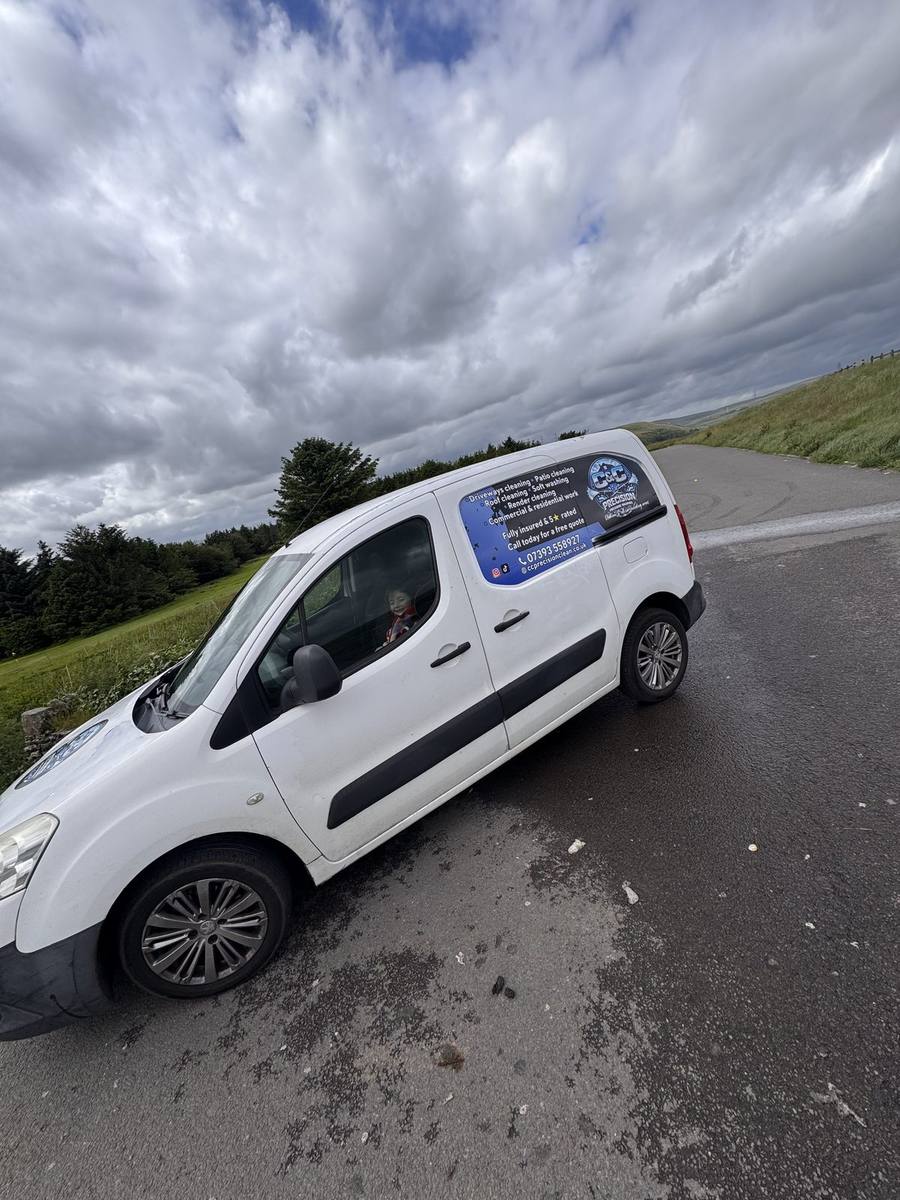
C&C Precision cover Oldham, Rochdale, Bury, Bolton, Manchester, Tameside, Stockport and surrounding towns.
Quick answer: A professional bin store cleaning service uses high-pressure hot or cold water washing, biocidal treatment, and deodourising agents to remove built-up grease, bacteria, mould, and odours from communal or domestic bin enclosures. Results are immediate and the area is left hygienically clean, safe underfoot, and free of foul smells.
What Is a Bin Store Cleaning Service?
A bin store cleaning service is a systematic clean of the enclosed area where wheelie bins or commercial waste containers are kept — not the bins themselves, but the structure around them: the floor, walls, any shelving or dividers, and the gate or door frame. The process uses a combination of pressure washing, appropriate cleaning agents and biocidal treatment to remove organic matter, kill bacteria and address mould growth.
It's worth being clear about what it is and isn't. Pressure washing removes surface contamination very effectively — biofilm, algae, compacted food residue, general grime. A biocidal treatment goes further by killing the bacteria and spores that cause persistent odour and recurring mould. What it won't do is reverse structural staining that's been left for years, or fully remove bleach-type discolouration that's already changed the surface colour. Honest expectation-setting matters here: the result is a clean, sanitised, significantly better-smelling space, not necessarily a pristine one if the store has been neglected for a long time.
This is a different proposition to hosing something down. A garden hose disperses contamination rather than removing it, and without a biocidal treatment the bacteria responsible for the smell simply re-establish themselves within days.
Why Bin Stores Get So Dirty So Fast
The conditions inside a bin store are almost ideal for bacterial growth. Leaking bin bags deposit food residue on the floor. Rainwater carries that residue into cracks and joins. The enclosed space retains warmth, especially in summer, and the lack of airflow means surfaces stay damp for longer. In the North West, where rainfall is consistent and winters are mild enough to keep bacterial activity going year-round, the problem compounds faster than it might in drier parts of the country.
Organic matter — food waste, garden cuttings, used nappies — breaks down and releases gases that get absorbed into concrete, brick and timber. That's where persistent odour comes from. It's not just on the surface; it's embedded in the material itself. Flies lay eggs in the residue, mould establishes in corners and on walls, and what started as a bit of a mess becomes a hygiene problem that a quick rinse genuinely cannot fix.
The speed of deterioration also depends on usage. A single household bin enclosure used carefully will stay manageable. A communal store used by twenty households, some of whom don't bag waste properly, can become seriously contaminated within a few weeks of a clean if it isn't managed consistently.
What's Included in a Professional Clean
The process starts with a pre-rinse to shift loose debris and soften surface contamination. After that, a suitable cleaning agent — usually a biocidal detergent or sodium hypochlorite solution at an appropriate dilution — is applied to walls, floor and any fixed surfaces. Dwell time matters here; the chemical needs time to break down organic matter and kill bacteria rather than just sitting on the surface briefly before being rinsed off. Cutting dwell time short is one of the reasons DIY attempts with off-the-shelf products often disappoint.
Once the dwell period is complete, the surfaces are pressure washed thoroughly — floor first, then walls, working the contaminated water out rather than pushing it further in. For stores with block paving floors, this is similar in principle to the kind of block paving cleaning done on driveways, though the confined space and concentration of contamination make it a different job in practice. After washing, a deodourising treatment is applied. This addresses residual odour at source rather than masking it with fragrance.
For stores with significant mould growth on rendered walls or brick, a separate mould treatment may be applied — similar to the approach used in softwashing for rendered exteriors, where the chemistry does the work rather than relying purely on pressure. This is particularly relevant for enclosed spaces where high-pressure washing alone can't reach into surface pores.
If your bin store has a block paving or concrete floor with open joints, check those joints after cleaning. Contaminated sand or debris accumulates in them and holds bacteria even after the surface looks clean. Re-pointing with fresh jointing sand after a thorough wash makes a real difference to how long the clean lasts.
Domestic vs Commercial Bin Store Cleaning
A domestic bin enclosure — typically a timber or composite structure holding two or three wheelie bins on a driveway or side passage — is a contained, relatively straightforward job. The contamination levels are usually lower, the volume of residue is smaller, and the clean can normally be completed in under an hour. Most homeowners have it done once or twice a year as part of their general exterior maintenance, alongside driveway cleaning or patio cleaning.
Commercial and communal bin stores are a different category entirely. A store serving a block of ten or twenty flats handles far greater volumes of waste, often from residents with varying standards of waste management. Contamination accumulates faster, odour problems are more severe, and the health and safety implications are more significant. Letting agents, housing associations and commercial landlords have a duty of care to maintain communal areas in a hygienic condition — that isn't just a matter of aesthetics.
Retail parks and commercial premises face similar challenges, often with compactor areas or large bin bays that see daily use. For this kind of work, a single annual clean is rarely adequate. The approach, frequency and chemistry all need to be matched to the actual usage pattern of the site, which is why we always ask to see photos before quoting.
How Much Does Bin Store Cleaning Cost?
A small domestic bin enclosure — one that holds two or three wheelie bins — typically costs between £40 and £80 for a one-off professional clean, depending on condition and how long it's been since it was last properly cleaned. Stores that haven't been washed in years and have significant mould or embedded residue will take longer and cost more than a relatively well-maintained one having its annual clean.
Communal and commercial bin stores are priced based on the number of bays, the floor area, the wall height, the condition and the frequency of visits. A large communal store serving a block of flats is a meaningfully different job from a domestic enclosure, and the price reflects that. For commercial sites where regular visits are needed, a scheduled maintenance agreement often works out more cost-effective than booking individual cleans reactively after things have deteriorated.
The fastest way to get an accurate figure is to send a few photos over WhatsApp. That gives a clear enough picture of size and condition to provide a realistic quote without needing a site visit first. There are no obligations and no hard sell — just a straight answer.
When to Call in a Professional Rather Than DIY
There are situations where DIY cleaning is adequate — a relatively clean domestic enclosure hosed down regularly with a basic cleaner, for example. But there are clear cases where it isn't. If odour persists despite regular cleaning, it's usually because bacteria are embedded in the surface and a consumer-grade product isn't killing them at depth. A biocidal treatment at appropriate concentration, applied with proper dwell time, is what's needed — and that's not something most householders have access to or familiarity with.
For landlords and housing associations, the DIY option rarely meets the standard required. Communal areas in managed properties have regulatory implications, and a record of professional, periodic maintenance is both practically useful and defensible if questions arise about condition and hygiene. This is especially true for larger sites where contamination levels, pest risk and volume of use make informal cleaning inadequate.
C&C Precision Precision Washing covers the full range of commercial exterior cleaning across Greater Manchester — if you manage properties or sites and want to understand what a regular maintenance arrangement might look like, the commercial exterior cleaning guide gives a useful overview of what's involved.
How to Keep a Bin Store Cleaner for Longer
The single most effective thing is proper waste bagging. Loose waste — especially food — breaks down and leaks almost immediately. If every bag going into a bin is properly tied and intact, the volume of residue on the floor drops dramatically. For communal stores, this often requires a reminder notice rather than being something that happens automatically, but it makes a measurable difference.
Ventilation helps too. Enclosed, airless spaces stay damp and warm, which accelerates bacterial growth. If there's any way to improve airflow through the structure — a ventilation gap, a slatted door — the conditions inside become less hospitable to mould and bacteria. It won't solve the problem on its own, but it slows deterioration between cleans.
After a professional clean, a biocidal aftertreatment can be applied to slow the re-establishment of bacteria and mould on walls and floors. This is similar in principle to the treatments used in roof cleaning, where a post-treatment biocide continues working on organic growth after the initial clean. It extends the period before the next clean is needed, which for high-use commercial stores can be worth the additional cost. Scheduling regular professional cleans — rather than waiting until the store is visibly deteriorated — is ultimately the most effective long-term approach.
Frequently asked questions
Do you clean bin stores for landlords and housing associations?
Yes. We work regularly with landlords, letting agents and housing associations across Greater Manchester. Communal bin stores are one of the most neglected areas in managed properties and we can set up one-off or repeat visits to suit your schedule.
Will pressure washing remove the smell from a bin store?
Pressure washing alone reduces odour but doesn't eliminate it if bacteria are embedded in the surface. We apply a biocidal treatment and a deodouriser as part of the process, which deals with the source of the smell rather than just masking it. Most customers notice a significant difference immediately.
How long does a bin store clean take?
A small domestic bin enclosure typically takes 20 to 40 minutes. A larger communal store for a block of flats or retail unit can take a couple of hours depending on size, condition and how many bays are involved. We'll give you a realistic time estimate when you send over photos.
How often should a bin store be professionally cleaned?
For domestic use, once or twice a year is usually enough. Commercial and communal stores used by multiple households or businesses benefit from quarterly cleans at minimum, and some high-footfall sites need monthly attention. We can advise based on what we see when you send photos.
Want a fast price for your bin store?
Send a few photos of the bin store on WhatsApp and we'll come back to you with a straight price, usually the same day.